

Bryce Christensen Excavating, Inc.
St. George, UTWashington County
demolition, excavation, grading, hauling trucking
36 years in business
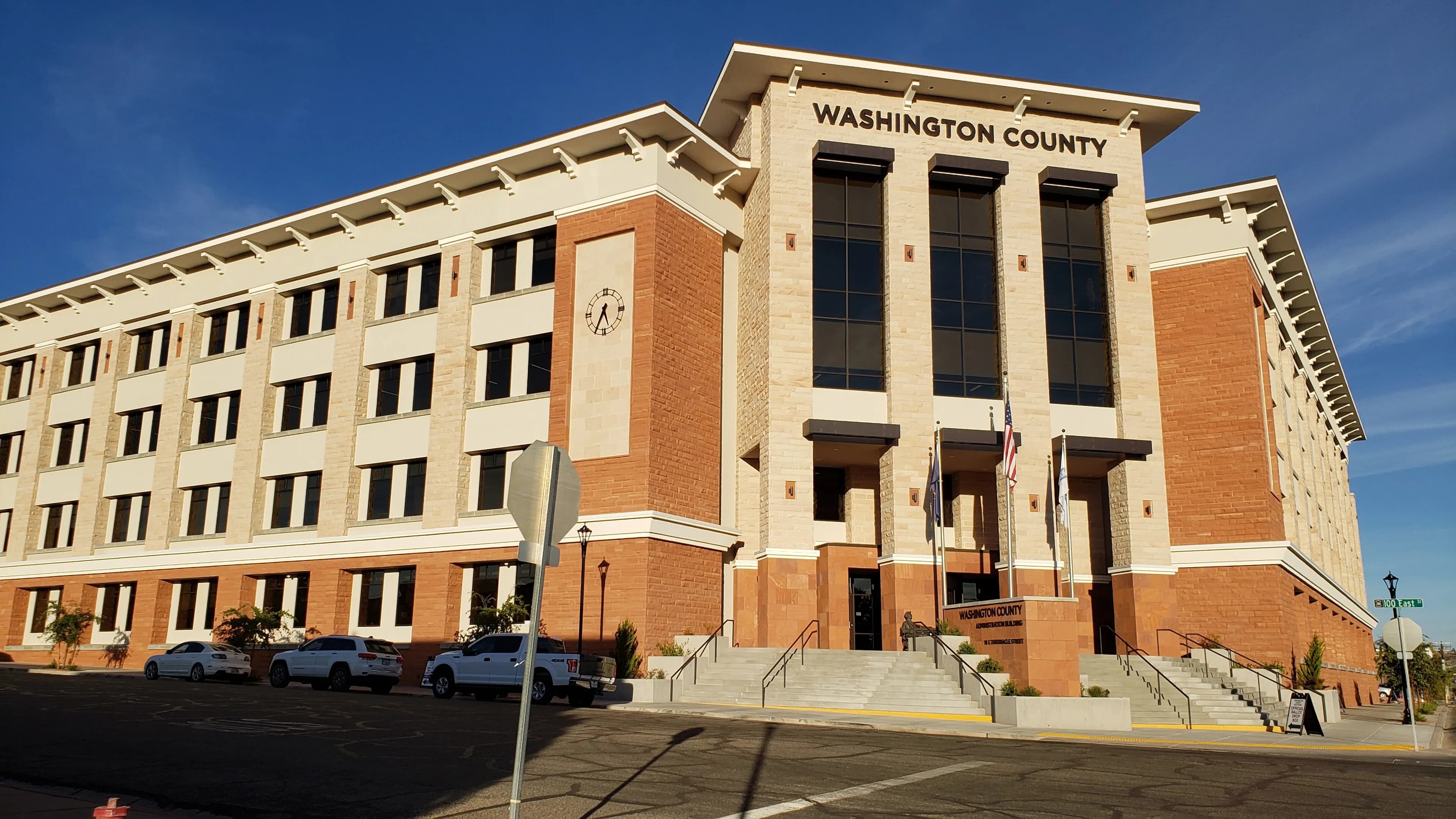
Photo: Invictus323 (CC BY 4.0) via Wikimedia Commons
Washington County, UT Contractor directory
32 verified excavating and site work contractors serving Washington County.
County excavation guide
Use this local research to understand soil, seasonal constraints, permits, and jobsite logistics before choosing a contractor.
Skip to 32 contractorsWestern and southwestern Utah are basin-and-range desert, where excavators are paid by the yard of loose alluvium and stopped by caliche. The upper few feet load fast: sandy loams, silty loams, and gravelly fan deposits that rip and shoot into trucks with little resistance. Production ends at the caliche, cemented calcium-carbonate hardpans that run from a tooth-scoring rind to continuous pavement between 14 and 20 inches down across the valley floors, demanding ripper teeth, a hydraulic hammer, or hoe-ram work that contractors price as a line item rather than an afterthought. Desert pavement and armored fan surfaces slow the first pass; deeper basin fill stands vertical surprisingly well when dry but ravels and slakes once wetted. Monsoon-season flash floods fill open trenches in minutes, so shoring, spoil setbacks, and daily weather calls are standard throughout the hot months. Groundwater is deep across most of the West Desert, sparing crews the worst dewatering, though playa edges and the Virgin River corridor near St. George bring shallow, wet, fine-grained soils that rut and demand bracing. Aggregate and granular borrow are abundant in the surrounding fans and washes; the real costs are caliche removal and long hauls back to the metro builds along I-15.
Moderate rock encounters along ridges and upper slope shoulders.
Low volumetric expansion risk in native subgrade.
Shallow water table; active dewatering or sumps needed for deep trenching.
Indicates poor natural drainage and potential jurisdictional wetland pockets.
Mountain/hilly terrain; terracing, benching, and tracked haulers frequent.
Standard gravity absorption fields viable in majority of soil types.
Administers NPDES stormwater discharge coverage for land-disturbing construction activities.
Jurisdiction over septic tank permits, soil evaluation perk tests, and drainfield sizing.
Mandatory notice window: 48 hours prior to mechanized earthwork (excluding weekends and legal holidays).
Building code minimum depth for footing frost protection.
Typical days with sub-freezing soil conditions affecting digging.
Peak precipitation window requiring sediment traps and soil aeration.
Nearest active quarry: 2.8 miles haul distance.(3 active crushed stone/sand operations within 50 miles).
17.9% of county underlain by soluble carbonate rock formations.
Yes. You should contact Utah 811 at least 2 working days before any digging so underground lines can be marked.
In Utah, footings typically need to extend below the frost line, which is around 36 inches here. A local contractor will confirm the code requirement for your site.
Verified local listings
32 verified listings (showing first 20)
St. George, UTWashington County
demolition, excavation, grading, hauling trucking
36 years in business

UT 84765, UTWashington County
erosion control, excavation, foundations, grading, pond water management, retaining walls




Washington, UTWashington County
demolition, driveways, excavation, foundations, grading, land clearing
21 years in business



No reviews yet



St. George, UTWashington County
excavation, foundations, grading, hauling trucking, trenching underground


St. George, UTWashington County
demolition, erosion control, excavation, grading, hauling trucking, retaining walls
Hurricane, UTWashington County
concrete cutting removal, demolition, erosion control, excavation, foundations, grading
20 years in business