

Robinson Landscape LLC
Telford, PAMontgomery County
concrete cutting removal, demolition, driveways, erosion control, excavation, foundations
26 years in business
Grading project guide
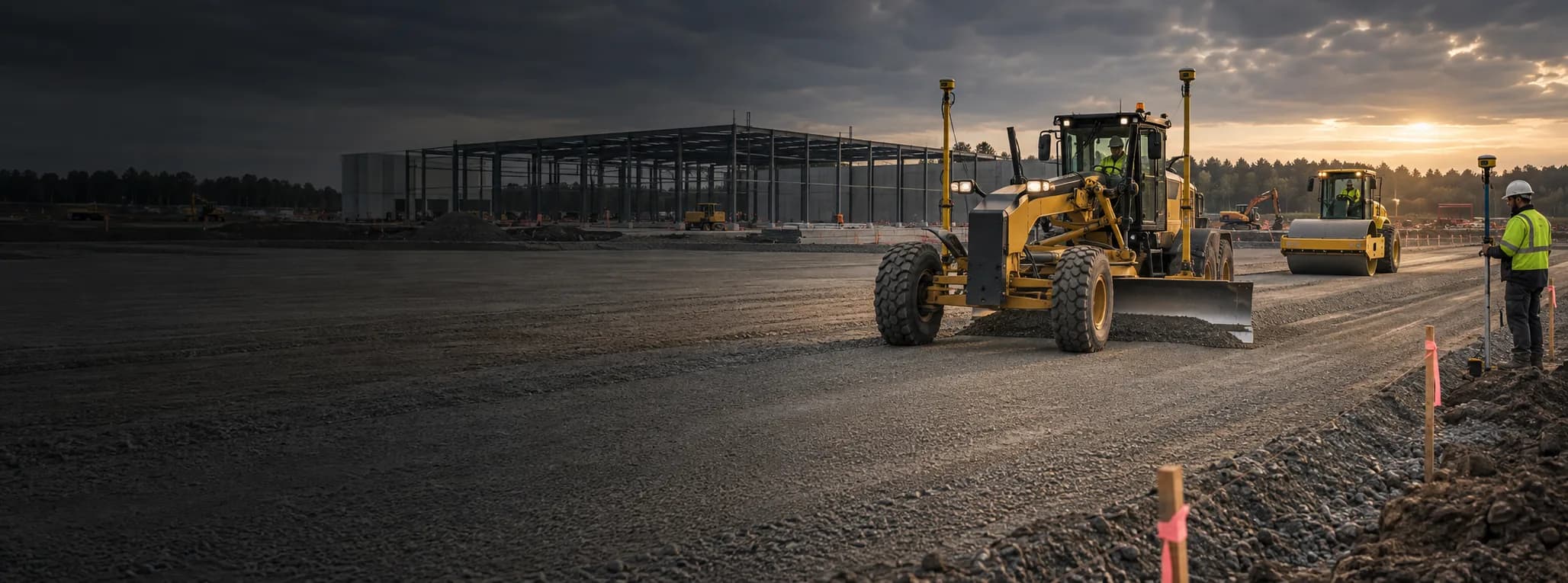
Rough and finish grading for building pads, yards and drainage, so water leaves the site instead of pooling against it.
Key facts
Rules and figures that come up in nearly every grading quote, with the public source for each one.
| Fact | What it says | Source |
|---|---|---|
| Drainage slope at the foundation | The IRC calls for the ground to fall at least 6 inches within the first 10 feet from the house, where the site allows. | International Residential Code, Section R401.3As of September 2026 |
| Stormwater permit trigger | Construction that disturbs 1 acre or more needs NPDES construction stormwater permit coverage and a written SWPPP. | EPA, Stormwater Discharges from Construction Activities (NPDES)As of September 2026 |
| Stabilization deadline | Under the federal Construction General Permit, disturbed soil left idle for 14 or more days must be stabilized. | EPA, Construction General Permit (CGP) Frequent QuestionsAs of September 2026 |
| Operator wages | The median construction equipment operator wage was $28.04 per hour in May 2024 (BLS OEWS). | U.S. Bureau of Labor Statistics, Occupational Outlook HandbookAs of September 2026 |
Project guide
Grading is the shaping of ground to a designed elevation and slope. Rough grading moves the bulk of the earth to bring a site close to plan; finish grading dials in the last few inches so a pad is level and a yard sheds water. The number that matters is fall: building codes call for the ground to drop at least six inches in the first ten feet away from a foundation, and a lawn or gravel area needs roughly a two percent slope to drain. Crews do this with a dozer, a skid steer with a grading bar, or a motor grader on larger lots, checked against a laser or GPS grade stake rather than by eye.
GradeLine lists 6,861 grading contractors.Compare their work and equipment, then confirm availability and service area before requesting a quote.
Listed businesses are based in Telford, Ava, , Saxapahaw, Purlear, Barkhamsted, though most crews travel well beyond their home city.
Rough grading is typically quoted by the hour for the machine, $100 to $200 for a dozer or skid steer with operator, or by the acre at roughly $1,000 to $5,000 depending on how much earth moves. Regrading a residential yard to fix drainage usually falls between $1,000 and $6,000. Finish grading a pad or lawn area is often priced per square foot, in the $0.50 to $2.50 range.
Ranges are national and approximate; regional labor rates, material prices and site conditions move them in both directions.
Rough grading is typically quoted by the hour for the machine, $100 to $200 for a dozer or skid steer with operator, or by the acre at roughly $1,000 to $5,000 depending on how much earth moves. Regrading a residential yard to fix drainage usually falls between $1,000 and $6,000. Finish grading a pad or lawn area is often priced per square foot, in the $0.50 to $2.50 range.
A grading plan or a simple sketch showing where water should end up is the most useful thing you can send. Point out low spots, existing drains, septic fields, tree roots and anything the machine needs to steer around.
The main cost items are cut and fill balance: whether dirt can be moved on site or has to be hauled in or out; compaction requirements, which decide whether a roller and density testing are on the job; access, the number of grade stakes or survey control points, and topsoil to strip and replace. A site visit helps the crew see which ones apply.
Many cities and counties require a grading permit once the job moves more than a set volume, often 50 cubic yards, or changes drainage toward a neighbor. Disturbing an acre or more triggers a stormwater permit and an erosion control plan in most states.
Pick a state to see the grading contractors listed there. Most crews travel well beyond their home city, so confirm the service area before requesting a quote.
LiveOpening as listings fill in
Contractor directory
6,861 contractors found
Telford, PAMontgomery County
concrete cutting removal, demolition, driveways, erosion control, excavation, foundations
26 years in business

Ava, MODouglas County
demolition, driveways, excavation, foundations, grading, hauling trucking
demolition, excavation, foundations, grading, land clearing, site prep

Saxapahaw, NC
driveways, excavation, grading, hauling trucking, land clearing, site prep

Purlear, NCAlleghany County
driveways, erosion control, excavation, grading, hauling trucking, land clearing

Barkhamsted, CTLitchfield County
concrete cutting removal, driveways, erosion control, excavation, foundations, grading

excavation, grading, hauling trucking, land clearing, pond water management, site prep

East Meadow, NYNassau County
concrete cutting removal, driveways, excavation, foundations, grading

Penn Hills, PAAllegheny County
demolition, erosion control, excavation, foundations, grading, land clearing

demolition, excavation, foundations, grading, hauling trucking, land clearing

demolition, driveways, excavation, foundations, grading, hauling trucking

demolition, driveways, erosion control, excavation, foundations, grading
Hebron Estates, KYBullitt County
demolition, driveways, excavation, grading, land clearing, pond water management

demolition, driveways, excavation, grading, hauling trucking, land clearing

demolition, erosion control, excavation, foundations, grading, hauling trucking
6 years in business

erosion control, excavation, grading, hauling trucking, land clearing, site prep

Stella, NCCarteret County
demolition, excavation, grading, hauling trucking, land clearing, septic systems

demolition, driveways, erosion control, excavation, foundations, grading

Murrayville, GAHall County
driveways, excavation, foundations, grading, hauling trucking, land clearing
Tell us about the job and add photos. A local pro calls you back. Free, and no spam.