
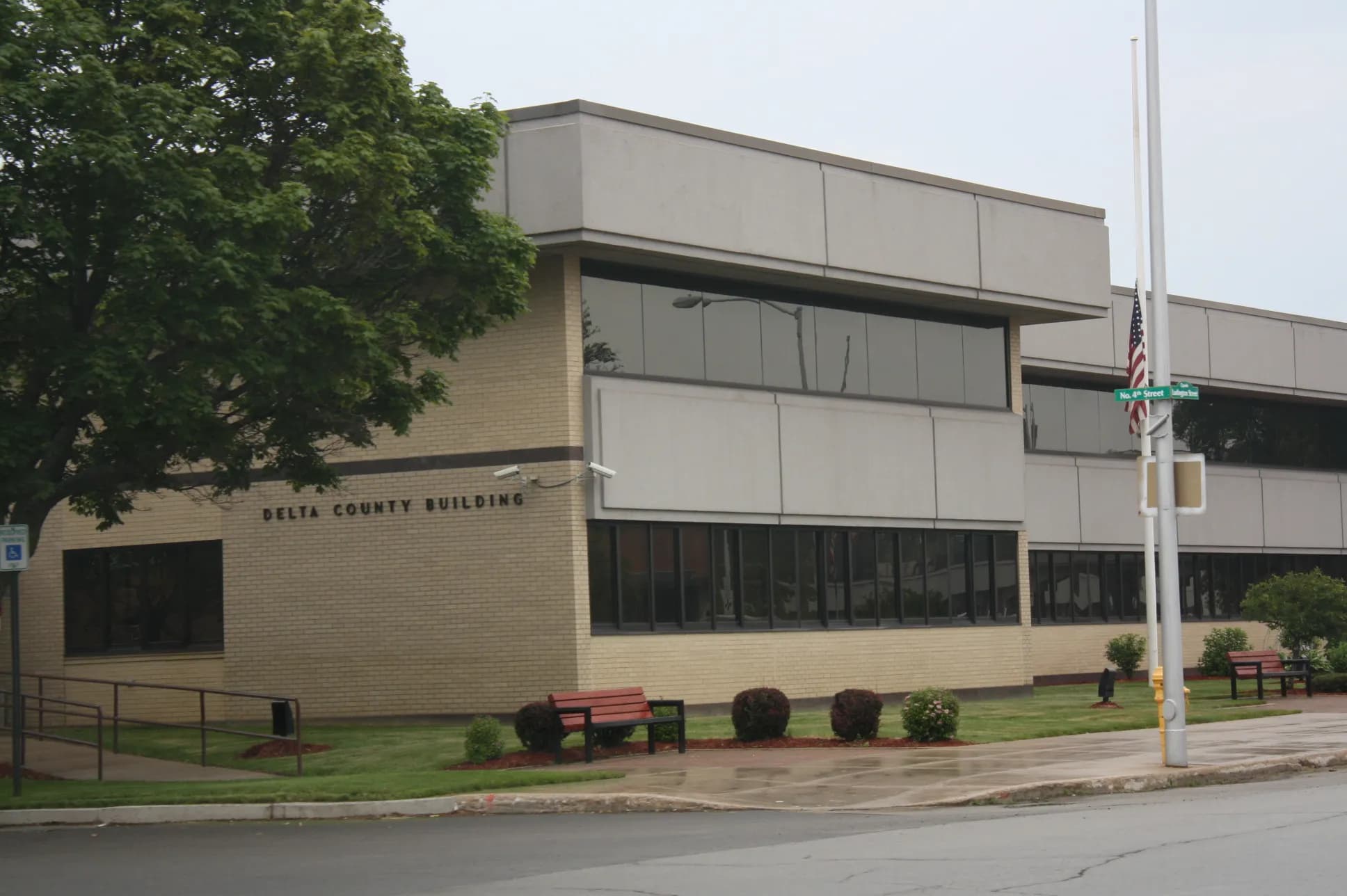
Photo: Royalbroil (CC BY-SA 3.0) via Wikimedia Commons
Delta County, MI Contractor directory
Excavation contractors in Delta County, MI
12 verified excavating and site work contractors serving Delta County.
County excavation guide
Ground conditions and project requirements in Delta County
Use this local research to understand soil, seasonal constraints, permits, and jobsite logistics before choosing a contractor.
Skip to 12 contractorsSoil Regime ProfileEPA Ecoregion 56, 49, 48 (Northern Glaciated Allegheny Plateau - Manistee, Northern Lakes and Forests, Eastern Superior/Ups and Boreal)
Michigan Northern Sand Plains, Swamps & Great Lakes Shorelands
Dominant Soil Order: Entisols / Spodosols / Histosols
Parent Material: Glacial Outwash Sand and Ice-Contact Gravel with Peat, Muck and Lacustrine Silt over Limestone and Dolomite
Northern Michigan digs differently than the southern metros. Glacial outwash sand and gravel dominate: loamy sand, fine sand and loam cut quickly with an open bucket but stand nearly vertical for minutes only, so sloping, shoring and trench boxes are standard practice rather than a precaution. Hydric soils are the region's signature: peat and muck occupy former glacial lake bottoms and cedar swamps across 40-55 percent of Saginaw Valley and northern counties (Bay, Saginaw, Sanilac, Gratiot, Schoolcraft), driving muck excavation and replacement, deep pier or engineered foundations, and mound or at-grade septic designs. Water tables run shallow: median depths of 6-15 inches are common: so dewatering and seasonal timing matter year-round. Bedrock is deep in the drift except along the Niagara Escarpment in the eastern upper peninsula, where limestone lies near the surface. Frost depth reaches the deepest design values in the country's lower 48 lake region (42-48 inches), and the short construction season concentrates excavation work tightly between May and October.
Geographic Footprint:Michigan's northern lower peninsula and eastern saginaw-plain counties (Traverse City, Petoskey, Gaylord, Saginaw, Bay City plus the upper peninsula) sit on outwash sand with heavy peat and muck: clean-cutting sands, wetland-heavy landscapes, shallow water tables and a compressed building season. Septic work is mound- and site-evaluation-driven.
Geotechnical Baseline
Physical Ground Conditions & Soil Properties
Shallow Bedrock (<50 in)
14.0%of county land area
Deep soil mantle; rock refusal rare for standard basement or trench cuts.
High Shrink-Swell Clay
0.0%expansive soil
Low volumetric expansion risk in native subgrade.
Median Water Table Depth
0inches from surface
Shallow water table; active dewatering or sumps needed for deep trenching.
Hydric / Wetland Soils
42.8%hydric coverage
Indicates poor natural drainage and potential jurisdictional wetland pockets.
Steep Terrain (Slope >15%)
1.9%of terrain
Predominantly gentle to rolling slopes suitable for wheeled earthmoving.
Septic Severe Limitations
87.3%severe rate
High rate of conventional drainfield limitations; engineered or drip systems often required.
Dominant Soil Textures:Fine sandy loamSandy loamSand
Surface Stones / Boulders: 25.6% coverage
Compliance & Permitting
Earthwork Regulations & Permit Thresholds
Stormwater & Erosion Control
Michigan EGLE Permit-by-Rule (Mich. Admin. Code R 323.2190) tied to Part 91 Soil Erosion and Sedimentation Control permit: earth change disturbing one acre or more (or within 500 ft of a lake or stream) needs a Part 91 SESC permit from the county/municipal enforcing agency; 1 to under 5 acres gets automatic NPDES coverage, 5 acres or more also requires a Notice of Coverage via MiEnviro ($400).
Administers NPDES stormwater discharge coverage for land-disturbing construction activities.
State Threshold:1.00 Acre
Local Threshold:Follows state
Onsite Wastewater & Utilities
Delta County Health Department (Environmental Health)
Jurisdiction over septic tank permits, soil evaluation perk tests, and drainfield sizing.
Housing on Septic:55.0%
Soil Evaluation:Sanitarian site evaluation of soil drainage, permeability and seasonal high water table; soil profile method, perc use varies by county
811 One-Call Requirements
MISS DIG 811
Mandatory notice window: 72 hours prior to mechanized earthwork (excluding weekends and legal holidays).
Licensing & Clearing Permits
Weather & Ecology
Seasonal Constraints & Clearing Windows
Frozen Ground Days
90days / year
Typical days with sub-freezing soil conditions affecting digging.
Wet Season Months
June, July, August, September, October
Peak precipitation window requiring sediment traps and soil aeration.
Supply Chain & Hazards
Logistics, Aggregate Sources & Geohazards
Aggregate & Material Supply
Bichler Quarry
Nearest active quarry: 1.4 miles haul distance.(5 active crushed stone/sand operations within 50 miles).
Flood & Hazard Overlay
FEMA 100-Yr Flood:3.6%(100% NFHL digital map coverage)
NWI Wetlands:109.6%jurisdictional coverage
Karst Terrain & Sinkhole Risk: Low
65.8% of county underlain by soluble carbonate rock formations.
HUC8 Primary Watersheds:Lake Michigan, Cedar-Ford, Escanaba, Tacoosh-Whitefish, Fishdam-Sturgeon
Public conservation land: 7.4% (USGS PAD-US).
Area-specific FAQ
Do I need to call before digging in Delta County?
Yes. You should contact MISS DIG 811 at least 3 working days before any digging so underground lines can be marked.
How deep do footings need to be in Michigan?
In Michigan, footings typically need to extend below the frost line, which is around 48 inches here. A local contractor will confirm the code requirement for your site.
Verified local listings
Excavation contractors serving Delta County
12 verified listings
St. John Trucking & Excavating LLC
Escanaba, MIDelta County
demolition, erosion control, excavation, grading, hauling trucking, land clearing
25 years in business


No reviews yet