

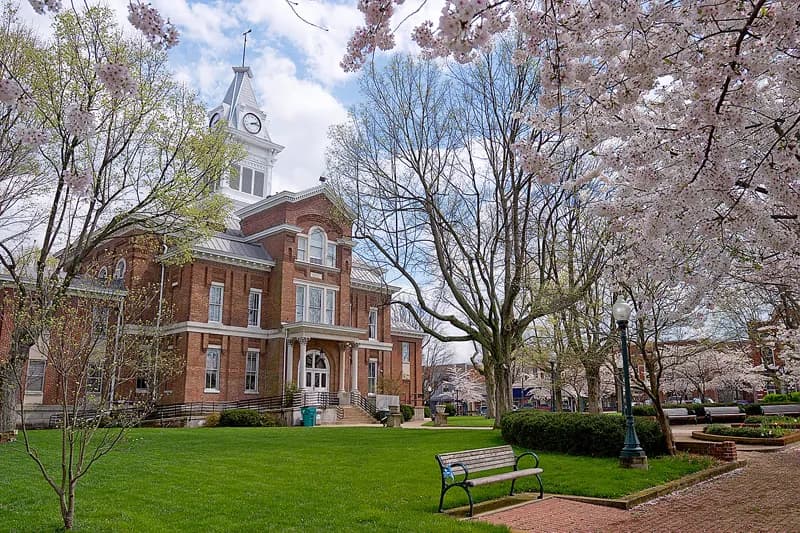
Photo: Wikimedia Commons (CC BY-SA 3.0) via Wikimedia Commons
Simpson County, KY Contractor directory
Excavation contractors in Simpson County, KY
2 verified excavating and site work contractors serving Simpson County.
County excavation guide
Ground conditions and project requirements in Simpson County
Use this local research to understand soil, seasonal constraints, permits, and jobsite logistics before choosing a contractor.
Skip to 2 contractorsSoil Regime ProfileEPA Ecoregion 71, 69, 68 (Interior Plateau, Western Allegheny Plateau, Southwestern Appalachians)
Kentucky Bluegrass Karst Limestone & Appalachian Coalfield Hills
Dominant Soil Order: Alfisols / Inceptisols / Ultisols
Parent Material: Ordovician-Mississippian Limestone with Phosphatic Bluegrass Residuum; Pennsylvanian Sandstone-Shale-Coal Measures in the Eastern Coalfield
Kentucky is limestone-and-slope country with the Midwest's densest karst. The Inner Bluegrass (Lexington, Frankfort, Danville) sits on Ordovician phosphatic limestone: soils are deep, well-drained silt loam residuum, digging is easy, but the karst is world-class: sinkholes, springs, losing streams and conduit groundwater make every septic system a hydrogeology exercise, and the state's agricultural water-quality rules trace directly to that conduited karst. The Knobs and the Mississippian plateaus add shallow Silurian and Mississippian rock. The eastern coalfield (Pikeville, Hazard, Harlan) is Appalachian hill country: slopes over 15 percent on 60-90 percent of land (the steepest in the region), thin sandstone-shale soils over Pennsylvanian bedrock, bench-cut access and contour septic lines, and abandoned-mine considerations that occasionally surface in utility work. The western coalfield and the Pennyroyal add the state's classic Mammoth Cave karst. Shrink-swell is negligible statewide; hydric soils are rare outside the Ohio River bottoms. Frost is 30 inches.
Geographic Footprint:Kentucky's counties (Lexington, Louisville, Bowling Green, Pikeville) combine Bluegrass karst, the knobs, and Appalachian coalfield hills: karst hydrology shapes septic and stormwater design in the limestone, slope-and-rock work dominates the coalfield, and shrink-swell is negligible. The 30-inch frost line keeps footings shallow.
Geotechnical Baseline
Physical Ground Conditions & Soil Properties
Shallow Bedrock (<50 in)
2.1%of county land area
Deep soil mantle; rock refusal rare for standard basement or trench cuts.
High Shrink-Swell Clay
0.0%expansive soil
Low volumetric expansion risk in native subgrade.
Median Water Table Depth
27inches from surface
Moderate depth; seasonal wet perched water tables possible in spring.
Hydric / Wetland Soils
2.4%hydric coverage
Indicates poor natural drainage and potential jurisdictional wetland pockets.
Steep Terrain (Slope >15%)
8.9%of terrain
Predominantly gentle to rolling slopes suitable for wheeled earthmoving.
Septic Severe Limitations
31.2%severe rate
Standard gravity absorption fields viable in majority of soil types.
Dominant Soil Textures:Silt loamSilty clay loam
Surface Stones / Boulders: 28.3% coverage
Compliance & Permitting
Earthwork Regulations & Permit Thresholds
Stormwater & Erosion Control
Kentucky Division of Water KPDES General Permit KYR10 (KYR100000, 2019 version set to expire Nov 30 2024; reissuance anticipated Dec 1 2024, current text not confirmed); construction disturbing one acre or more, including common plans of development. NOI via eNOI at least 7 days before construction, SWPPP required.
Administers NPDES stormwater discharge coverage for land-disturbing construction activities.
State Threshold:1.00 Acre
Local Threshold:Follows state
Onsite Wastewater & Utilities
Simpson County Health Department
Jurisdiction over septic tank permits, soil evaluation perk tests, and drainfield sizing.
Housing on Septic:55.0%
Soil Evaluation:Onsite evaluation by health department staff or engineer; backhoe pits or at least 4 soil borings; soils suitable to 30 in
811 One-Call Requirements
Kentucky 811
Mandatory notice window: 48 hours prior to mechanized earthwork (excluding weekends and legal holidays).
Licensing & Clearing Permits
Weather & Ecology
Seasonal Constraints & Clearing Windows
Frozen Ground Days
0days / year
Typical days with sub-freezing soil conditions affecting digging.
Supply Chain & Hazards
Logistics, Aggregate Sources & Geohazards
Aggregate & Material Supply
Franklin Quarry
Nearest active quarry: 6.1 miles haul distance.(18 active crushed stone/sand operations within 50 miles).
Flood & Hazard Overlay
FEMA 100-Yr Flood:5.9%(100% NFHL digital map coverage)
NWI Wetlands:2.9%jurisdictional coverage
Karst Terrain & Sinkhole Risk: Low
100.0% of county underlain by soluble carbonate rock formations.
HUC8 Primary Watersheds:Red, Barren
Public conservation land: 0.3% (USGS PAD-US).
Area-specific FAQ
Do I need to call before digging in Simpson County?
Yes. You should contact Kentucky 811 at least 2 working days before any digging so underground lines can be marked.
How deep do footings need to be in Kentucky?
In Kentucky, footings typically need to extend below the frost line, which is around 30 inches here. A local contractor will confirm the code requirement for your site.
Verified local listings
Excavation contractors serving Simpson County
2 verified listings

No reviews yet