

Stump It Out
Is this your business?
Verify your details, add your own photos, and make sure homeowner calls reach you.
Direct contact
No middleman
Established crew
Local contractor
Service area
Renton, WA
About the crew
Stump It Out serves Renton, WA with excavation, site preparation, and related earthwork services. Contact the crew directly to discuss the site, schedule, and project requirements.
Location: 1717 SE 166th St, Renton, WA 98055
Counties served: King County
Talk to the crew
Request a quote
Share the project basics with Stump It Out. Your request goes directly to the contractor.
Fast Quote Form
Services
Driveways
Driveways
Driveway contractors build the surface between the road and the house, from a gravel farm lane to a poured concrete approach, and the base under the surface decides how long any of them last. A typical driveway is excavated to remove topsoil, graded with a crown or cross slope so water runs off, and built up with four to eight inches of compacted crushed stone before the top layer goes on. Where the driveway crosses a roadside ditch it needs a culvert sized by the county, and the connection to a public road is regulated by the road authority. Gravel is the least expensive and needs regrading every year or two; asphalt costs more and needs sealing; concrete costs the most up front and lasts longest if the base and joints are done right.
Excavation
Excavation
Excavation contractors dig and move earth for foundations, basements, utilities, pools and site cuts. Most residential jobs run on a mini or mid-size excavator paired with a skid steer and a dump truck; larger cuts bring in a dozer or scraper. The price depends less on the size of the hole than on what is in the ground: clay, ledge rock, high groundwater and buried utilities all slow the machine down and change the hauling math. Before the bucket touches dirt the site needs an 811 utility locate, and any trench deeper than five feet needs a protective system under OSHA rules.
Foundations
Foundations
Foundation contractors build the part of the structure that carries everything above it into the ground: spread footings below frost depth, stem walls or basement walls, monolithic and slab-on-grade foundations, and pier or grade beam systems where soils are poor. The work follows the stamped plans and the geotechnical report, and it is inspected at fixed points, usually the open footing trench with rebar in place before the pour, then again before the slab and before backfill. Frost depth sets the footing bottom, from about twelve inches in the Gulf states to four feet or more across the northern tier. Waterproofing or dampproofing, a footing drain and free-draining backfill are what keep a basement dry, and they are cheapest to do right while the wall is still exposed.
Pond Water Management
Pond Water Management
Pond and water management contractors excavate and shape ponds, build or repair the embankment dams that hold them, and cut the ditches, swales and channels that move water across a property. A pond that holds water starts with the soil: it needs a clay core or a compacted clay liner, or a synthetic liner where the ground is sandy or rocky, and the dam is built in compacted lifts with a keyway cut into the original ground. Every pond also needs a way to pass the big storm, usually a principal spillway pipe plus an emergency spillway cut in natural ground, sized for the watershed above it. USDA NRCS publishes free design standards for farm ponds that most contractors follow. Cleanouts, which remove years of silt and reshape banks, are common on older ponds and are priced by the cubic yard removed and where that muck can be spread.
Trenching Underground
Trenching Underground
Trenching and underground utility contractors open the ground for pipe and conduit, bed and backfill it, and put the surface back. What looks like a straight line on a plan is governed by a few hard numbers: 811 locates before any digging, a minimum cover depth that varies by utility (commonly 18 to 24 inches for electric and gas service, and below the frost line for water), and OSHA's requirement that any trench five feet or deeper have a protective system such as a trench box, shoring or a sloped wall, with a competent person on site. Bedding material under the pipe, compaction of the backfill in lifts and tracer wire on non-metallic pipe are the details that separate a line that lasts fifty years from one that settles and cracks the driveway above it.
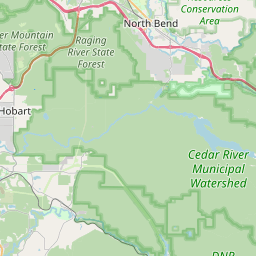
Service area



© OpenStreetMap contributors
Answers
Frequently asked
Straight answers from Stump It Out.
How do you price stump removal?
How do you price stump removal?
We base pricing on stump diameter at ground level, number of stumps, access conditions, and whether root chasing is required. Send us a photo and ZIP code for an accurate quote.
Can you remove roots completely?
Can you remove roots completely?
Yes. If you choose stump removal rather than grinding, we chase roots as needed and leave soil ready for building or re-planting.
Do you call 811 for utility locates?
Do you call 811 for utility locates?
We work utility-safe. For deeper root work near marked utilities, a locate may be required. We coordinate with you before starting.
Will the job be messy?
Will the job be messy?
We protect surrounding areas with shields and tarps, and offer optional haul-away. You can also keep chips for mulch.
What if my gate is too narrow?
What if my gate is too narrow?
Our compact grinder fits through most 36-inch gates. For smaller access points, we assess on site and may use specialized equipment.
Can't reach this crew?
Tell us about the job and add photos. A local pro calls you back. Free, and no spam.
Similar businesses
Other excavation contractors near you on GradeLine worth comparing.
State Construction Inc
Renton, WA
excavation
5.00View

FUTURE DIG LLC
Renton, WA
excavation
4.80View
Behnke & Sons Excavating LLC
Renton, WA
excavation
5.00View

Badger Daylighting - Seattle Washington, WA.
Kent, WA
concrete cutting removal, excavation, hauling trucking
3.70View
Wolf Recycling & Excavating Inc.
Renton, WA
excavation
4.90View

Gold Dust Demo LLC
Renton, WA
demolition, excavation, foundations
5.00View
Brike Construction and Excavation
East Renton Highlands, WA
excavation
5.00View

WA Underground inc.
Covington, WA
excavation
4.90View