
Jenkins Grading
Direct contact
No middleman
Established crew
Local contractor
Service area
Fairview, NC
About the crew
Jenkins Grading serves Fairview, NC with excavation, site preparation, and related earthwork services. Contact the crew directly to discuss the site, schedule, and project requirements.
Location: 150 Moonstone Dr, Fairview, NC 28730
Counties served: Buncombe County
Talk to the crew
Request a quote
Share the project basics with Jenkins Grading. Your request goes directly to the contractor.
Fast Quote Form
Services
Driveways
Driveways
Driveway contractors build the surface between the road and the house, from a gravel farm lane to a poured concrete approach, and the base under the surface decides how long any of them last. A typical driveway is excavated to remove topsoil, graded with a crown or cross slope so water runs off, and built up with four to eight inches of compacted crushed stone before the top layer goes on. Where the driveway crosses a roadside ditch it needs a culvert sized by the county, and the connection to a public road is regulated by the road authority. Gravel is the least expensive and needs regrading every year or two; asphalt costs more and needs sealing; concrete costs the most up front and lasts longest if the base and joints are done right.
Erosion-Control
Erosion-Control
Erosion and sediment control keeps disturbed soil on the site and out of storm drains, ditches and neighboring property while construction is under way and until vegetation is established. Under the federal Clean Water Act, any project that disturbs one acre or more needs coverage under a construction stormwater permit and a written plan, commonly called a SWPPP, and many cities set lower thresholds. The physical work is simple and unglamorous: silt fence trenched in along the downhill perimeter, a stone construction entrance so trucks do not track mud onto the road, protection around every inlet, check dams in ditches, and erosion control blanket or hydroseed on slopes. What most owners underestimate is the maintenance: controls have to be inspected after every rain of a quarter inch or more and repaired, and inspectors write violations for torn fence and full silt traps, not for missing paperwork.
Excavation
Excavation
Excavation contractors dig and move earth for foundations, basements, utilities, pools and site cuts. Most residential jobs run on a mini or mid-size excavator paired with a skid steer and a dump truck; larger cuts bring in a dozer or scraper. The price depends less on the size of the hole than on what is in the ground: clay, ledge rock, high groundwater and buried utilities all slow the machine down and change the hauling math. Before the bucket touches dirt the site needs an 811 utility locate, and any trench deeper than five feet needs a protective system under OSHA rules.
Foundations
Foundations
Foundation contractors build the part of the structure that carries everything above it into the ground: spread footings below frost depth, stem walls or basement walls, monolithic and slab-on-grade foundations, and pier or grade beam systems where soils are poor. The work follows the stamped plans and the geotechnical report, and it is inspected at fixed points, usually the open footing trench with rebar in place before the pour, then again before the slab and before backfill. Frost depth sets the footing bottom, from about twelve inches in the Gulf states to four feet or more across the northern tier. Waterproofing or dampproofing, a footing drain and free-draining backfill are what keep a basement dry, and they are cheapest to do right while the wall is still exposed.
General-Excavation
General-Excavation
General excavation contractors handle the range of earthwork that does not fit neatly under one heading, and they are the right call when a property needs several of them at once: a driveway cut, a drainage fix, a pad for a shop, a trench for water to the barn and a pile of stumps hauled off. A typical outfit runs a mid-size excavator, a skid steer or compact track loader, and a dump truck or trailer, and prices by the hour with a minimum or by the job for anything with a defined scope. Because the work is varied, the estimate is only as good as the description of the site, and the most useful thing an owner can do is walk the contractor through everything on the list at once so the machine moves once and mobilization is paid once.
Grading
Grading
Grading is the shaping of ground to a designed elevation and slope. Rough grading moves the bulk of the earth to bring a site close to plan; finish grading dials in the last few inches so a pad is level and a yard sheds water. The number that matters is fall: building codes call for the ground to drop at least six inches in the first ten feet away from a foundation, and a lawn or gravel area needs roughly a two percent slope to drain. Crews do this with a dozer, a skid steer with a grading bar, or a motor grader on larger lots, checked against a laser or GPS grade stake rather than by eye.
Hauling-Trucking
Hauling-Trucking
Hauling contractors move bulk material to and from job sites: delivering gravel, sand, topsoil and fill, and removing excavated spoil, concrete and demolition debris. Pricing is built around truck size and cycle time. A tandem dump truck carries roughly 10 to 14 cubic yards, a tri-axle 15 to 18, and a belly dump or end dump trailer over 20; the driver's rate covers loading, travel, dumping and any wait time at either end. Distance to the pit or landfill is often the biggest variable, and tipping fees for debris are usually passed through separately. Contractors who also run a loader or excavator can load their own trucks, which matters when nothing on site is available to fill them.
Retaining-Walls
Retaining-Walls
Retaining walls hold back soil where a grade change is too steep to slope, and they fail for one reason far more than any other: water. A wall that lasts has a compacted crushed-stone base, a perforated drain pipe at the heel, clean gravel backfill behind the wall face, and geogrid layers tied into the backfill on anything tall. Segmental concrete block is the most common residential system and can be built by a landscape contractor up to about four feet; above that, or wherever a driveway, slope or structure sits above the wall, an engineer's design is required by most codes and the wall becomes structural work. Poured concrete and reinforced masonry walls are used for tall cuts and tight sites, boulder walls for rural and natural-look projects, and pressure-treated timber for budget walls with a shorter life.
Septic-Systems
Septic-Systems
Septic contractors install and replace the tank, distribution box and drain field that treat wastewater on properties without sewer. Nothing goes in the ground until a soil evaluation or percolation test has been done and the county or state health department has approved a system design; the installer builds to that design and the inspector looks at the open trenches before they are covered. Conventional gravel-and-pipe drain fields are the least expensive where soil drains well, but heavy clay, high water tables and small lots push jobs toward chambers, sand mounds, drip dispersal or an aerobic treatment unit, each with a different price and maintenance schedule. Most states license septic installers separately from general contractors, and many require a pumping and inspection record at property sale.
Trenching-Underground
Trenching-Underground
Trenching and underground utility contractors open the ground for pipe and conduit, bed and backfill it, and put the surface back. What looks like a straight line on a plan is governed by a few hard numbers: 811 locates before any digging, a minimum cover depth that varies by utility (commonly 18 to 24 inches for electric and gas service, and below the frost line for water), and OSHA's requirement that any trench five feet or deeper have a protective system such as a trench box, shoring or a sloped wall, with a competent person on site. Bedding material under the pipe, compaction of the backfill in lifts and tracer wire on non-metallic pipe are the details that separate a line that lasts fifty years from one that settles and cracks the driveway above it.
Equipment capabilities
Service area
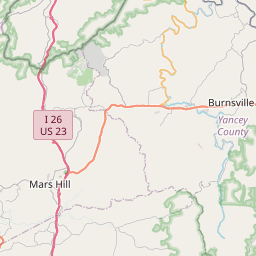
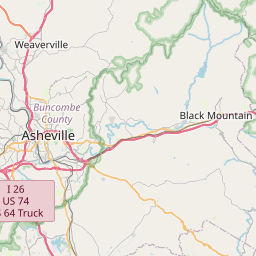
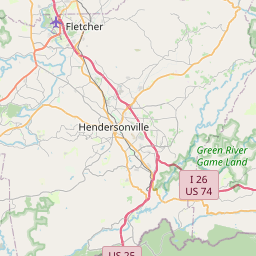
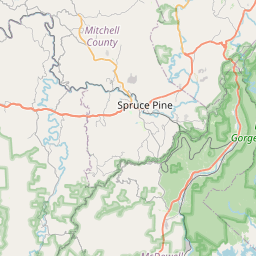
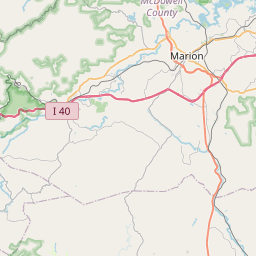
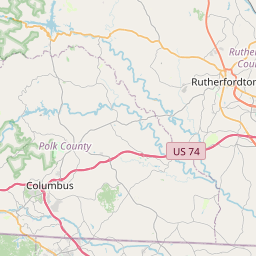
© OpenStreetMap contributors
Is this your business?
Verify the listing, correct details, and add your own project photos.
Similar businesses
Other excavation contractors near you on GradeLine worth comparing.
K & M Grading & Land Management
Fairview, NC
excavation, general-excavation
5.00View
BB's Land Management
Fairview, NC
driveways, erosion-control, excavation
5.00View

Backwoods Grading, Landscape, & Excavation, LLC
Fairview, NC
demolition, driveways, excavation
4.60View
Target Contracting
Swannanoa, NC
excavation, general-excavation
NewView
Grey Eagle Grading, LLC
Swannanoa, NC
excavation, general-excavation
5.00View
Rogers Grading
Swannanoa, NC
excavation, general-excavation
NewView
Ronnie Craig Grading Contractor
Swannanoa, NC
excavation, general-excavation
5.00View
EWING'S EXCAVATION & GRADING
Swannanoa, NC
excavation, general-excavation
4.60View